Pro-remain MPs Seek To Continue EU Employment Law In Britain

A new cross-party group named ‘Vote Leave Watch’ has been set up by pro-EU MPs in an effort to convince Theresa May to sanction employment law legislation that gives UK workers to maintain certain rights they’ve enjoyed under EU law regardless of the potential change that Brexit may bring.

Labour MP Chuka Umunna, Chair of the Vote Leave Watch group, has expressed his fear that worker rights will ‘fall away’ should effective support not be implemented prior to Britain formally leaving the European Union. Umunna wrote to the PM arguing that she should continue supporting EU employment law: “You owe it to the working people of Britain to make clear that the pledges made by your cabinet colleagues to retain EU legislation on workers’ rights will be delivered”.

Vote Leave Watch wants to prioritise certain aspects of EU Law, namely those laws that relate to employee annual leave and break times. The party firmly believes that worker rights can be preserved if new UK legislation incorporating current EU laws is officially passed into law, such as the working time directive.

The party also plans to convince the government to undertake an audit of every occasion when the European Court of Justice passed a decision in support of legal employment rights for UK workers. This data will be reviewed with the possibility of making such past rulings an official part of UK law beyond EU regulations.

In addition to the efforts of Vote leave Watch, other organisations have spoken of their concern at UK workers losing certain working rights after Brexit. USDAW union General Secretary, John Hannett, spoke of his support for EU legislation which he believes has helped British workers against “discrimination, unscrupulous bosses, and the worst excesses of Tory governments”.

Hannett has made an appeal directly to Theresa May, in which he states: “The prime minister came to office talking a good game about standing up for working people. She should guarantee that every single right for workers delivered by the European Union will stay in place.”

Employment Opportunities Unfairly Denied To Muslim Women

A report issued by the Commons Women and Equalities Committee has revealed how Muslim women in Britain regularly suffer discrimination in the workplace by seeing their opportunities limited as a result of assumptions being made about their lifestyle and character.

The report records how MPs believe UK employers regard their behaviour as an “acceptable form of discrimination” after such assumptions have gone unchallenged for so long. The report conducted its enquiry with the help of race relation experts and included input by Muslim students in London.

The chair of the Commons Women and Equalities Committee, Maria Miller, states how the findings of the report reflect a larger attitude in which it is “seen as acceptable to discriminate against Muslim women”. She finds this attitude troubling and asserts how “you can’t have some women more equal than others”.

The result of this investigation is expected to begin a more detailed discussion regarding the working experiences of Islamic women. Miller elaborates: “There is a distinct level of institutional racism that is being endured by Muslim women and we must be open about that.”

Another finding of the report is that in order to increase workplace promotion, some women have ceased wearing traditional Islamic dress despite very much wanting to do so. Many women also report that on some occasions they have felt a duty to reveal information about their personal lives, such as whether they are married or have children. The reason behind the need for such information is largely reflected by the stereotype of Muslim women being expected to act subordinately to their husbands and consider the duty of raising children before focusing on their career.

Another discriminatory circumstance found by the report is that employed Muslim women are denied work assignments that require them to travel. Unfair treatment like this is often considered justified by employers because such work involves a degree of independence that Muslim culture is incorrectly seen to not “allow” for women.

Previous attempts to prevent job application discrimination against minorities resulted in the proposal of ‘name blind’ applications in which candidate identity is not revealed. This is done in the hope that the whole process will prevent lifestyle assumptions being made when the name of a candidate is seen.

The report also highlights wider issues of employment affecting the British Muslim community in a more general way, including how Muslim unemployment has reached a level that is more than double the rate of other UK workers. MPs consider these results to be a reflection of a long held societal division between British Muslims and wider society. This is partly due to a fear of Muslim radicalisation in British society, which the report records as having “exacerbated” the inequality experienced, and thus increased tensions.

Shock Study Reveals 50% of Women Suffer Workplace Sexual Harassment

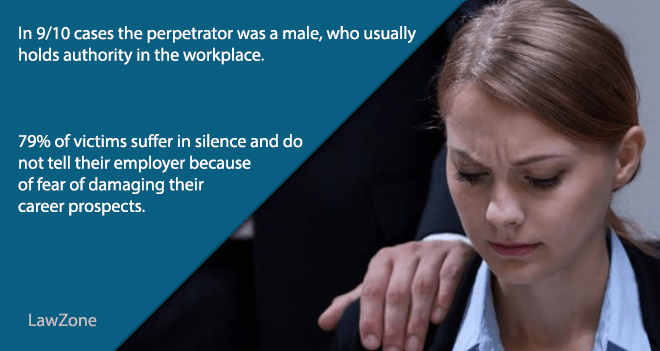
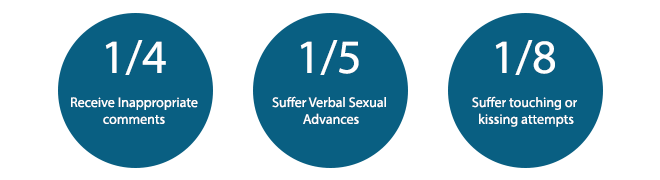
A shock recent study researched jointly between the TUC (Trade Unions Congress) and the Everyday Sexism Project has discovered that 52% of women in the UK workplace have experienced an incident of sexual harassment. A third of the women polled for this study also experienced uninvited sexual comments, and a quarter of them spoke of an instance which involved an act of unwanted touching. The study also revealed that most women did not report the episode to a administrative body at their place of work.

Woman-abuse2

The TUC is calling the report the biggest sexual harassment study for a generation. Laura Bates, the founder of the Everyday Sexism project, has expressed how serious the findings are:

This research shows there’s a huge gap between that perception and the reality of what women are facing. […] Many people would like to think that workplace sexual harassment was a thing of the past, in reality it is alive and well, and having a huge impact on tens of thousands of women’s lives.”

One of the causes of sexual harassment incidents going unreported to relevant authorities is that women are not confident they will be taken seriously. 24% of the women interviewed who have personally experienced this disclosing a lack of confidence as their reason. Furthermore, 15% of women spoke of feeling scared at the possibility that speaking out would have repercussions for their future career prospects, and 28% fear a disclosure might hurt their relationship with fellow colleagues. For 20% of women, the reason for staying silent is the embarrassment that a disclosure would cause.

The nature of sexual harassment goes far beyond an actual physical attack, which 1% of women said they experienced. An act of sexual harassment constitutes subtler behaviour that other members of staff may not detect, including comments of a sexual nature and inappropriate hugging, both directly or indirectly.

The TUC report has also brought to light reveals some of the employment scenarios through which sexual harassment is allowed to take place. It is especially prevalent in situations where women receive career benefits like flexible working and training opportunities, as this could lead to women being taken advantage of in exchange for such bonuses.

Woman-abuse3The statistics of the survey also found that 17% of cases were perpetrated by the victim’s line manager or equivalent authority. Such behaviour is detailed as being possible due to hidden ‘power dynamics at play’ between bosses and employees.

The report also concluded that younger women aged between 18-24 are most likely to experience harassment. A total of 63% of the 130 women in this age bracket interviewed for the report claimed an experience of harassment.

Younger women are more likely to be on zero hour contracts, employed in junior roles, and working through temp agencies. The TUC believes these types of employment scenarios are factors that contribute towards harassing behaviour.

Frances O’Grady, the general secretary of the TUC, spoke to Radio 4’s The Today Show about her concern at the findings. She explained that many women decline to report harassment due to being ‘ashamed and frightened’ by the experience: “It makes us miserable at work where we just want to do our job and be respected.”

She also challenged the weak response that inappropriate comments are just ‘a bit of banter’ which female workers should not let affect them personally:
“How many times do we still hear that sexual harassment in the workplace is just a bit of ‘banter’? Let’s be clear – sexual harassment is undermining, humiliating and can have a huge effect on mental health … It has no place in a modern workplace, or in wider society.”

The results of the report have already influenced Labour Party MPs to back TUC agenda arguing for the reinstatement of parts of the Equality Act that would force employers to greater liability in harassment cases. Moreover, the TUC is also campaigning for the government to end the employment tribunal fees that employees must pay before a hearing can be granted, as it is believed the charges are discouraging women from seeking legal action. Some of these fees can be as high as £1,200.

The government has made a statement giving it’s own reaction to the report: “No one should experience harassment or abuse of any kind in the workplace [..] Section 40 has not been scrapped and any employee who experiences harassment is protected by the Equality Act – regardless of who the perpetrator is.”


Deliveroo Workers Must Pay All Employment Tribunal Costs

A recent investigation into the employment criteria of the popular restaurant food delivery service Deliveroo revealed there is a shocking clause in the company’s contracts for self employed workers which prevents them from receiving the same employment rights of other employees.

The Guardian is reporting that the company’s cyclist employees are not legally entitled to bring Deliveroo to employment tribunal unless they they pay for all the expenses the company occurs in the process.

The Deliveroo contract reportedly words this rule as follows: “You further warrant that neither you nor anyone acting on your behalf will present any claim in the employment tribunal or any civil court in which it is contended that you are either an employee or a worker.”

Deliveroo wages are also under the microscope as they are considered barely satisfactory as each employee earns just £7 an hour, with an additional £1 for each delivery they make. This barely reaches minimum wage.

Moreover, it appears there are few other benefits available for self-employed Deliveroo workers who are also expected to pay their own national insurance. The business has been very successful since its founding in 2010 and is estimated to have generated around £158 million in revenue thus far.

The legality of making workers pay for tribunal costs has its roots in 2013 alterations that resulted in employees being held responsible for all costs accrued at tribunal should their claim prove unsuccessful. However, many legal professionals are claiming that Deliveroo’s current position is unlawful and is actually just an effort to to intimidate workers and deter them from legal action.

Deliveroo is already experiencing a backlash for these rules. The company has released the following statement: “We provide a platform for people to work with us on a freelance basis. This allows riders to work flexibly around another commitment, like studying or other work. We’ve worked with legal experts to design our contracts to reflect that and we’re proud to be creating opportunities for over 5,000 riders across the UK.”

Deliveroo is not the only service-based company currently being analysed. There has also been much focus on how drivers of the taxi-hailing mobile app Uber are currently locked in a court case against the company in the hope of adding greater employment rights to their contract, such as a standard living wage, sick payments and a pension scheme.

Delivery firm contracts were scrutinised earlier this year when The Guardian investigated Hermes courier service, which was revealed to be paying many of its workers below national minimum wage despite the company’s claim to the contrary.

The Hermes analysis recently became a political affair after Birkenhead MP Frank Field officially requested for Theresa May to launch a review of existing legislation for self-employment contracts so that British workers easily understand the legality of self employment contracts, thus preventing exploitive conduct occurring.

Whether the situation involving Deliveroo and Uber will turn into a investigation like that of Hermes remains to be seen.

Will Brexit Change Employment Law Rights?

Now that everybody has finally gotten over the shock of Britain choosing to leave the EU, the government can begin the process of evaluating, and if necessary reordering, elements of UK employment law across various working sectors.

But what exactly can employers and employees expect to see changed? Will anything actually be altered?

David Davis, the B Secretary of State for Exiting the EU, has hinted that no radical changes will be taken. Posting his views on the Conservative Home website, he states: “All the empirical studies show that it is not employment regulation that stultifies economic growth, but all the other market-related regulations, many of them wholly unnecessary”.

However, a Britain now free of EU regulations has a huge number of opportunities available that will surely at least be considered. Read on for an insightful, although admittedly speculative, assessment of what the consequences of Brexit could be for UK employment.

Abolishing EU law
The remain campaign was insistent that many of the employment benefits we currently enjoy were implemented by the EU. However, a quick review of this claim shows that much of the existing legislation was actually formed via British courts, much of it in accordance with The Equality Act 2010.

Any effort to dismantle these existing laws would be difficult to undertake due to the unrest it may cause if the expectations that workers are accustomed to get removed. The government will not want to make any disturbances that pose a threat to the current unity of UK employment law.

Before Brexit, Labour leader Jeremy Corbyn suggested that there would be a “bonfire of rights” if Britain left the EU. For example, can you imagine how unpopular the government would be if the current employment legislation relating to constructive dismissal, discrimination rights and working time regulations were altered?

Not making major changes to existing law also means there will likely not be no major break from the guidelines presented by the Court of Justice of the European Union (CJEU) and European Court of Justice (ECJ), thereby quietly re-enforcing certain aspects of EU employment law regardless of the freedom Brexit brings.

Rather than change existing laws, it is just far more likely that any new EU legislation passed in Brussels will find much less support for implementation into British law and be judged more sharply.

Curbing immigration
A large reason for the Brexit vote was concern over immigration, and removing the EU Freedom Of Movement law will certainly create major changes for UK employment practices.

Business owners must be aware of the forthcoming new rules for hiring migrants and what the consequences will be for not following them. Those EU workers already in Britain are likely to be granted permission to stay, but hiring new EU employees will probably soon reflect the legislation familiar with non-EU countries, such as the point-based migration system used in Australia.

Holiday allowance
One area of employment law that is likely to undergo alteration is holiday allowance. The allowance that UK workers currently enjoy is a result of the EU Working Time Directive; legislation that clearly details the holidays an employee is entitled to in accordance with their contract. However, industry personnel are expecting considerable alteration to this area of law, and Frances O’Grady of the Trade Union Congress recently stated that the six million Trade Union members whose employment corresponds specifically with the Working Time Directive will be heavily affected.

The most probable changes to holiday allowance will involve the means by how holiday pay is calculated, and the various controversies that surround the 48-hour working week. Although, the extent of these changes are unlikely to be large. David Davis has noted the unfairness that swift changes could cause: “The great British industrial working classes voted overwhelmingly for Brexit. I am not at all attracted by the idea of rewarding them by cutting their rights.”

Transfer of undertakings
One area of employment law that has proved unpopular with UK businesses is the Transfer of Undertakings (Protection of Employment) Regulations 2006, commonly known as TUPE.

Since TUPE was first introduced in 1981, it has been the primary legislation to protect worker rights in situations where there has been a transfer of undertakings or service provision alteration, as outlined in the agreement of their contract,

Brexit may prove to be the perfect opportunity for the government to alter TUPE, but such changes will likely be made gradually to avoid employee upset. Because TUPE plays a strong role in protecting workers, Unions must also be vigilant when challenges by big businesses appear. David Davis has noted that “Britain has a relatively flexible workforce, and so long as the employment law environment stays reasonably stable it should not be a problem for business.”

Exactly when employment law changes will take effect is unclear, but Theresa May has spoken about of her intention to wait for the government to agree better trade deals before Article 50, the official name given to the formal notice of leaving the EU, is implemented.
Sex Discrimination Win For Male Police Officer

Workplace harassment and gender discrimination most often affects women, but as one recent case involving the Metropolitan police department shows, men are sometimes also on the receiving end of this.

An employment tribunal ruling concluded that Chief Inspector Adrian Denby of Paddington Green Station, London, suffered sex discrimination on five occasions since 2014 at the hands of a female superior officer who was leading a nationwide effort to crack down on masculine behaviour within the force, to thus make the force “more attractive” to female staff. In recent years there have been a number of high profile cases involving alleged patriarchal control within the MET, which has harmed the equality ethos of the force.

Denby was first discriminated against in September 2014 when Deputy Assistant Commissioner, Maxine De Brunner, visited the Territorial Support Group (TSG) that Denby was responsible for managing at Paddington Green station, London. On this occasion De Brunner witnessed a male officer walking from the shower facilities wearing only a towel. Behaviour of this kind has been described as her ‘pet hate’ because it has been proven to of alienated and offended female staff in the past.

Denby faced an internal and criminal investigation over the incident, along with accusations of his improper behaviour regarding a range of other incidents, including unsubstantiated claims of him selling alcohol at the station, allowing staff to openly make homophobic comments, and ‘cheating hours’ by claiming overtime he had not performed. These accusations were made particularly difficult for Denby as his female counterpart at TSG saw no equivalent action get taken against her.

Not only did this treatment result in Denby feeling like a scapegoat for the supposed cultural failings of the TSG, but also caused distress because De Brunner had not considered the numerous improvements that he had personally made to the TSG throughout his employment.

Denby agreed that he should have not allowed male staff to walk semi-naked from the shower, but claims his decision to allow this was due only to the ‘poor design’ of the station’s showers.

Denby’s concerns proved justified, as the tribunal found him to be an “impressive and straightforward witness” who suffered from a clear case of sex discrimination. In contrast, De Brunner’s testimony was considered “not credible”.

The tribunal also took note of Denby’s outstanding past achievements as evidence of his good character, including his being awarded nine commendations, and how he recently travelled to Afghanistan to contribute to the creation of the Afghan police force.

Across the UK, a total of 62 sex discrimination claims have been made by men over the past five years, and this is only the seventh case to have actually won. However, despite Officer Denby’s success, a spokesman for the Met has stated that the police force now intends to fully appeal the tribunal decision: “We have carefully considered the judgement [and] have sought leave to appeal the findings.”

A damages hearing for Officer Denby is currently planned for October.

New Report Highlights UK Pregnancy Discrimination

A recently survey produced by the Equity and Human Rights Commission (EHRC) shows a startling number of young women are experiencing workplace discrimination over issues relating to pregnancy and maternity.

The EHRC report also reveals how women are six times more likely to be dismissed from their job if they are pregnant, and that 6% of women blow the age of 25 will suffer discrimination from an employer. This is a major contrast to the estimated 1% of mothers from older age groups who are likely to experience discrimination. 15% of the younger mothers polled for the survey claim they were pressured into resigning from their role, a figure that contrasts with the 7% of older women who felt the same. In total, every year pregnancy discrimination forces 54,000 women from their jobs.

EHRC official Caroline Water has commented on the findings: “Young working mothers are feeling the brunt of pregnancy and maternity discrimination with more than any other age group being forced out of their jobs, facing harassment and experiencing issues with their health as a result.”

Further issues explored in the report show how many young women are unaware of their rights regarding discrimination in the workplace. This is particularly true of women in less stable employment positions that are of a lower wage, as they are less likely to confront an employer and speak out legally regarding their grievance, largely out of fear of experiencing employer retaliation. This is especially true of service based employment sectors such as childcare, which are industries that require hundreds of thousands of UK women to work to zero hours contracts.

The impact of pregnancy discrimination on younger women, who are yet to reach their full potential in the workplace is that they feel they have no choice but to make choose between starting a family and having a career; a decision amplified by the lack of trade union representatives available in these career industries.

The EHRC is already searching for solutions to correct these issues, and has launched a campaign to encourage pregnant women to speak out regarding their rights. Employers are also being encouraged to assist in this effort by ensuring that women have a safe and comfortable environment in which they can speak.

Ms Water of the EHRC has spoken of the necessity in creating such an atmosphere for working mothers: “We cannot continue to allow these young women to be unfairly held back in the starting blocks of their working lives when they could have the potential to achieve greatness”.

Since July 2013, UK employment tribunals require fee payments by claimants, even if their claim proves not to be successful. This makes bringing a case to tribunal very difficult for young women and it is made worse by the current law requiring all cases to be submitted within three months of the grievance suffered, which is a short time period for a woman to make while simultaneously preparing for the lifestyle adjustment that motherhood brings. The lack of tribunal support for young mothers is evidenced by the less than 1% of pregnancy discrimination claims being brought before an employment tribunal.

The tribunal fee of 2013 was intended to reduce false claims from being launched but has ultimately had the negative consequence of denying many genuine cases from being heard.

The Scottish government plans to remove tribunal fees in the near future; a move made possible thanks to Scottish parliament being given greater power in accordance with the Scotland Act 2016. Once this legal change is made, Scottish women will be legally empowered to confront maternity and pregnancy dissociation on a far greater degree scale, which may inspire the other UK countries to follow suit.

Office Temp Stands Up To Dress Code “Discrimination”

A controversy in the workplace emerged recently as a London office temp was sent home from work when she refused to wear high heels in an office. Nicola Thorpe, 27, was informed by her bosses at Central London finance business, PwC, that she is expected to wear shoes with a heel measuring 2 to 4 inches. She attended work that day wearing flat shoes and declined to wear heels on grounds that her male colleagues are not expected to do the same.

Ms Thorpe complained that heels would cause her discomfort when working a full day’s shift and asked whether the flat shoes she is accustomed to wearing in UK offices could be an alternative option, but she was sent home without pay and told she would have to come back with high heels before being suitable for work. In an interview with BBC Radio, she explained: ‘if you can give me a reason as to why wearing flats would impair me to do my job today, then fair enough’, but they couldn’t […] I was expected to do a nine-hour shift on my feet escorting clients to meeting rooms. I said ‘I just won’t be able to do that in heels”.

When Ms Thorpe took to Facebook to voice her concern, she quickly discovered that many other women had experienced similar treatment in the workplace; treatment that could be classed as a form of discrimination. Such an occasion often goes unreported as many women are not comfortable voicing their concern to their peers in what is often a male dominated environment and as a result suffer in silence.
Ms Thorpe believes her experience has sexist connotations: “Aside from the debilitating factor, it’s the sexism issue. I think companies shouldn’t be forcing that on their female employees.” This belief is supported by Frances O’Grady, general secretary of the TUC, who says the situation at PwC “reeks of sexism” and said in a statement that “high heels should be a choice, not a requirement”.

Ms Thorpe has created an online petition to abolish the mandatory high heel dress code for women for which she has received upwards of 10,000 signatures thus far. Detailing her experience, she revealed: “I was a bit scared about speaking up about it in case there was a negative backlash, but I realised I needed to put a voice to this as it is a much bigger issue.”

Simon Pratt is the managing director of Portico, the firm that runs PwC. He has provided an explanation for the dress policy in place at PwC, claiming it is standard practice within the service sector to maintain guidelines for employee appearance in order to “positively represent a client’s brand and image”. Mr Pratt also detailed how Ms Thorp had signed the appearance guidelines when she originally began employment with PwC and did not object to the agreed code. Although, it now seems Portico are at least acknowledging that Ms Thorpe has raised some relevant issues as the company is now reconsidering its footwear rules and reviewing existing guidelines.

This situation has provoked much interest in the world of employment law, as it raises questions regarding the legality of whether employees, male or female, should be expected to follow such rigid dress codes at the expense of their personal comfort.

Current UK law allows for employers to dismiss any employee who does not abide by a “reasonable” dress code, on condition that each employee is given a fair amount of time to make arrangements for doing so. Employers also have the legal right to judge what they deem appropriate attire independently of any fixed criteria. Although, UK law states that an “equivalent level of smartness” must be ensured for equality between men and women.

Another important question that Ms Thorpe’s situation has provoked is whether a woman has the right to sue her employer if she feels an employment dress code has discriminated against her. A successful case will be much easier to win if it can be proven that the employer expects women to dress a certain way in a bid to evoke a notion of femininity, rather than creating an intended brand image for the business. Although this too could prove difficult depending on the nature of the business.

It is worth noting though that a legal case against an employer could be possible on health related grounds, as the daily wear of high heels can lead to foot injuries, and the long term affects may result in serious consequences like arthritis and nerve damage.

Emma Supple is a podiatrist at the College of Podiatry, and has been a vocal supporter for abolishing mandatory heels for women in the workplace due to the potential health detriment is causes . In 2009, she voiced her concerns at the House of Commons and noted that her speech “really opened some eyes to the issue”. Her efforts subsequently led to a 2009 TUC motion that women should not be forced to wear heels at work. However, this is yet to prevent businesses from instructing employees to do so if it constitutes supporting a brand image.

The assertion that an employee’s health and comfort takes precedence over expectations of image is certainly reflected by Ms Thorpe’s experience. She feels existing expectations of office dress codes for women need re-evaluating: “I don’t hold anything against the company necessarily because they are acting within their rights as employers to have a formal dress code, [but] women can be smart and formal and wear flat shoes”.

Gay Discrimination Ruling Challenged by Christian Bakery

In a case important for illustrating the legal consequences of how the personal belief of business proprietors can result in accusations of discrimination against customers, a court has heard how the proprietors of a Northern-Irish bakery have appealed a 2015 court ruling that they discriminated against a customer’s sexuality.

Gay rights activist, Gareth Lee, claims he was refused the right to purchase a custom-made cake featuring the words ‘Support Gay Marriage’ with an accompanying image of Sesame Street characters Bert and Ernie due to the Christian sentiment of the shop owners. The cake was intended for enjoyment at a private function in celebration of International Day Against Homophobia.

Mr Lee, a member of the gay charity Queer Space, took offence to the refusal at Ashers Bakery and subsequently took the business to court on grounds that they violated his human rights via direct discriminating against his sexual orientation.

He won his case in 2015 and received £500 in damages from the MacArthur family who run Ashers Bakery. However, the ruling was not without controversy as many legal observers felt the MacArthur family have the right of religious freedom and were thus were merely affirming the Christian teachings of homosexuality they follow, despite the bakery not having a clear Christian appearance or tone.

Ashers are appealing the ruling on grounds that their reaction to the request does not constitute discrimination as they insist the refusal was not made directly as a result of Mr Lee’s sexuality. They assert that he had been a customer on several previous occasions without any hint of prejudice projected towards him by the bakery, although there is some uncertainty as to whether the bakery was aware of Mr Lee’s sexuality prior to his order of the cake.

Ashers also insist the refusal related to the actual content of the cake’s message rather than a reaction against Mr Lee’s sexuality, and as such there is no legal reason that it is their duty to supply him with a product bearing such a message.

The MacArthur family further rejects the earlier ruling with claims that their actions do not count as discrimination against Mr Lee because a heterosexual man seeking a cake with a gay slogan would also have been refused the such a purchase, but due to the law only covering harm experienced by an individual, the possibility of the MacArthurs not providing a cake of this kind to all people was not considered by the court.

The court ruling will made at an as of yet unscheduled date.

Tribunal success for police officer facing racial discrimination

A British-Asian police officer who specialised in anti-terror activities has won a tribunal claim against Kent police force on grounds that he was racially discriminated against by being overlooked for a job promotion.

Angus Bowler was an officer at Kent Police for 25 years, during which time he specialised in counter terrorism activities and anti-immigration duties under employment with the frontier branch. At the time he suffered detriment he was working near the Channel Tunnel station in Coquelles, France, where he had been living with his family since 2010.

After not being considered for the promotion he was worthy of, PC Bowler expressed his concerns about the seemingly unreasonable snub to relevant personnel at Kent police but found the resulting internal investigation on the issue to be unsatisfactory. Following his disclosure PC Bowler claims he became a target of bullying and discrimination.

The employment tribunal in Ashford ruled that after considering further information about internal police conduct, PC Bowler had indeed experienced further discrimination. This includes his personal performance review results being lowered and his freedom to make visits to his French officer peers abruptly curtailed despite no same restriction being enforced upon his white British colleagues.

Internal responsibility for assessing PC Bowler’s claim belonged to DCI Andy Somerville, who told him there was no grounds for a claim, which DCI Somerville repeated when cross examined at tribunal. He supported his assertion by referencing what he called the “race relations act”, which is believed to be in reference to the 2010 Equality Act.

DCI Somerville said he found the legislation of the Equality Act ‘convoluted’ and chose instead to understand the law more intensely by consulting the definition of racism via an Oxford English dictionary. After sharing the definition with other officers, it was the unanimous opinion of all officers that they had not behaved in a discriminatory manner towards PC Bowler.

Speaking at the Tribunal in April 2016, PC Bowler revealed the depth of his sufferance: “Having dedicated more than 25 years to the police force, it was shocking and crushing to find that I was treated differently because of the colour of my skin. This case has caused me and my family a great deal of turmoil and upheaval, but I am relieved to finally be able to put this ordeal behind me and move on.”

In a statement, a Kent policeman responded to the tribunal ruling: “Kent police was legally represented at the hearing and acknowledges the decision of the employment tribunal. A date for a remedies hearing is yet to be confirmed.”